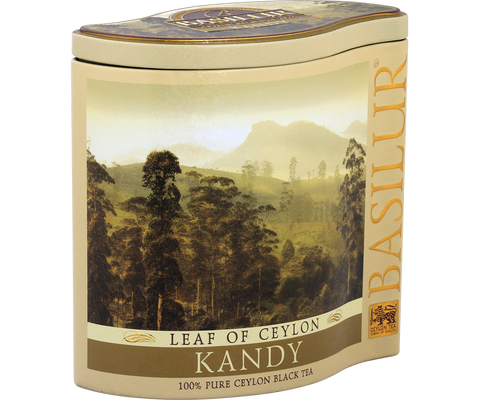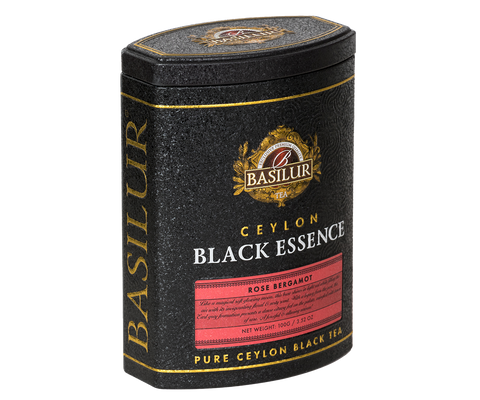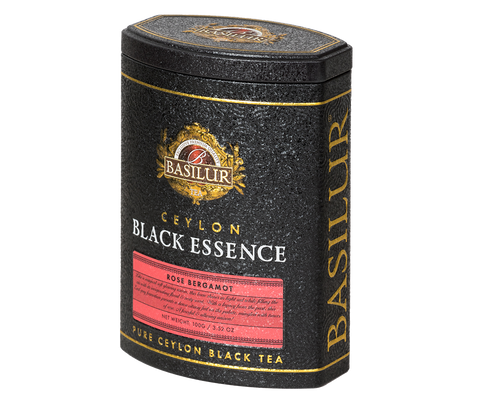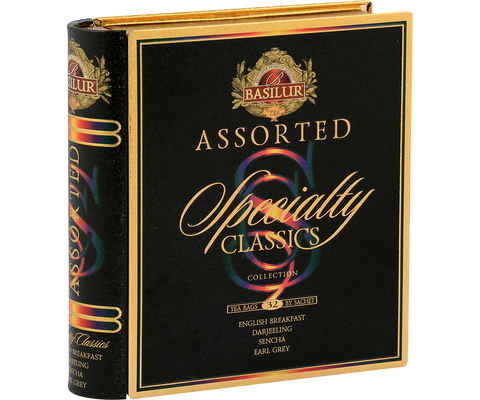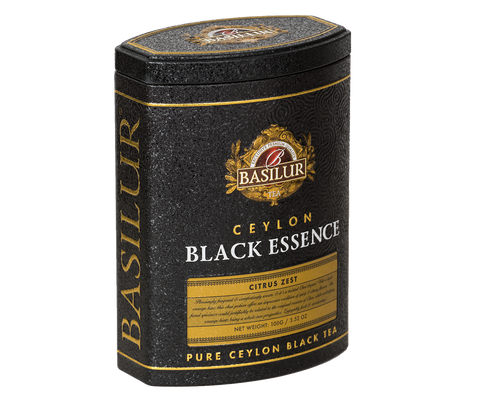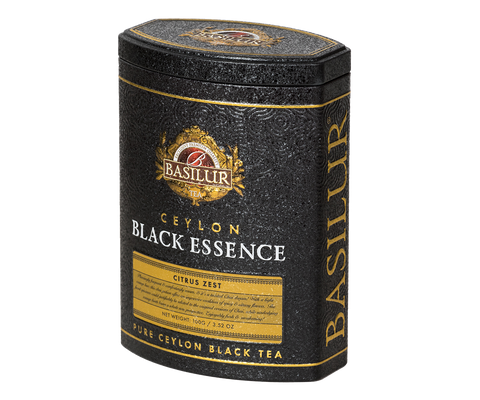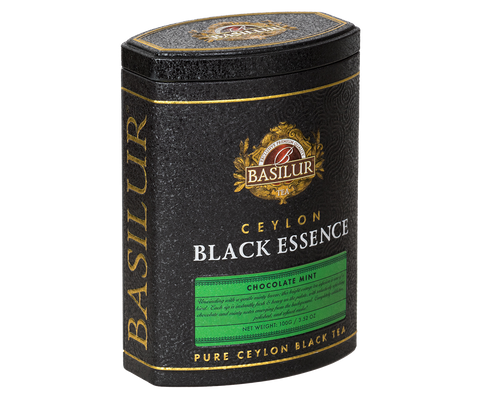
Basilur Tea

Pure Ceylon Tea

Served Straight from the lush mountain peaks where the finest tea leaves eagerly waits to be yours... and BASILUR tea is another synonym to the expression of pure Ceylon tea, which redefines the essence of quality, associated with the logo “Ceylon tea”. We serve nothing but the best, tantalizing your taste buds with our collection is what Basilur tea strives for...

So let’s sit down and have a cup of tea while we tell you all about the exciting benefits we have in store for you.
clock face hour hand minute hand second hand

BASILUR Tea is a Premier Tea Trading Company Exporting the Finest of Ceylon Tea to countries including Commonwealth of Independent States (CIS), Europe and United States.

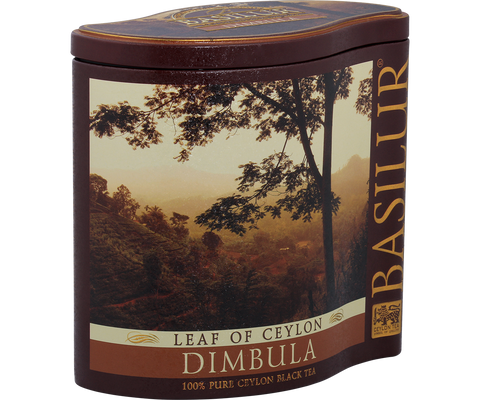
Our tea, BASILUR, is cultivated in areas such as Dimbulla and Nuwara Eliya, renowned worldwide for producing the finest of Ceylon Black Tea, under ideal climatic conditions as Sri Lanka is a tropical country blessed with fine precipitation all year round. Together with mineral rich soil and intense tending of our devoted artisans, it’s only natural to breed the finest tea in the world.

clock face hour hand minute hand second hand


Almost every shape/design of our products is unique to BASILUR and custom-made for us. Skilled specialists with over several decades of tea experience select only the best tea for BASILUR.

We are comparatively small. Therefore, we can offer you a more personalized and flexible service than others. Only the highest quality packaging materials have been used to ensure freshness, convenience to consumers and quality of overall products.

Freshness is an important fact in tea quality and in differentiating brands. BASILUR is packed right where the tea is grown. BASILUR guarantees a fresh cup of tea in each of their packaging, just few days after the tea is harvested.

At BASILUR Tea, we are mostly passionate about quality. From plucking to fermenting, tasting and sorting we have set stringent standards to compete on a par with the best quality tea from all around the world.

clock face hour hand minute hand second hand

What tea is used for BASILUR brand?  
  BASILUR has emerged as a 100% Pure Ceylon tea product. We have a range of Ceylon High Grown teas, Medium Growns and Low Growns. High Grown & low Grown black teas are also available with & without flavours. Also a range of flavoured & non flavoured green teas are available under BASILUR.  
     
What is the difference between BASILUR teas and other teas?  
  Almost every shape/design of our products is unique to BASILUR and custom-made for us. Skilled specialists with over several decades of tea experience select only the best tea for BASILUR. We are small. Therefore, we can offer you a more personalized and flexible service than others. Only the highest quality packaging materials have been used to ensure freshness, convenience to consumers and quality of overall product.

Freshness is an important fact in tea quality and in differentiating brands. BASILUR is packed right where the tea is grown. BASILUR guarantees a fresh cup of tea in each of their products, just few days after the tea is harvested.
 
     
What are the most popular blends under BASILUR tea?  
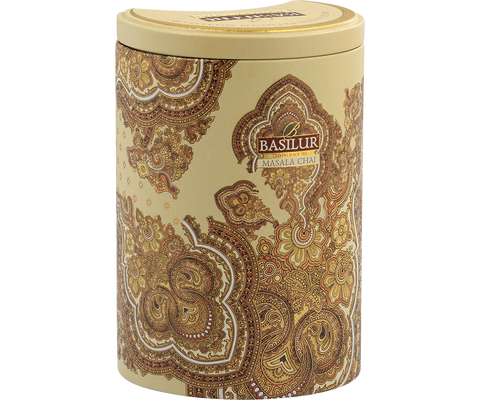
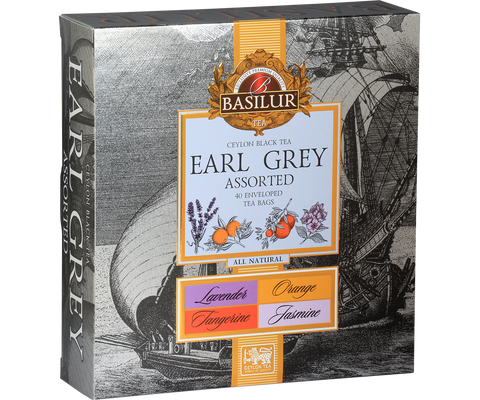
  Whilst all blends have been well received by consumers around the world, we have noticed some special preference towards specific blends. The FESTIVAL COLLECTION teas rank first in that category while BOUQUET teas have been a very popular choice among the female consumers. FRUITS & FLOWERS was a novel experience to many customers where it gave them the opportunity to experience pure black /green tea with teas mixed with fruits & flowers in two parts of the same product.


Is BASILUR Leaf Tea is better than tea bags?  
  Occasionally, tea connoisseurs will express contempt for tea bags, for the following reasons

1. Tea bags usually contain broken grades so that they will infuse quickly.
2. Whole-leaf teas come in a larger number of varieties; and the most interesting and enjoyable teas are sometimes not     available in bags.
3. Connoisseurs like to have something to sneer at.

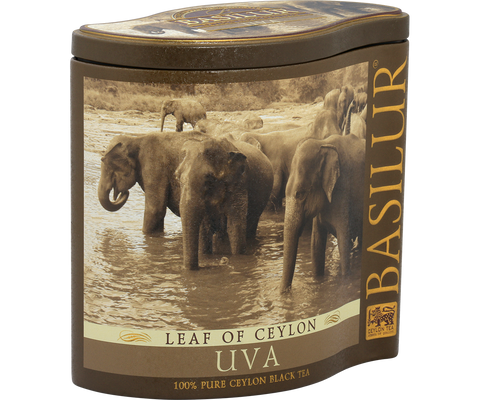
Nevertheless, BASILUR use only the highest quality grades for our tea bags ensuring the same enjoyment as of a leafy grade. Of course, you can always enjoy BASILUR leaf tea better because you could touch it and feel it and see how is has been made. We invite you to enjoy some of the unique characters of Ceylon teas such as Dimbula, Nuwara Eliya and Uva in BASILUR tea bags.
 
     
A friend of mine recently offered me a delicious BASILUR tea and was unable to find it in my local supermarket. How can I receive your teas?  
  Our local distributors names & their links are in the CONTACTS section. If you are from another country/region, please write to us at marketing@basilurtea.com or call us at +9471 8943311 at 24/7/365. We will be glad to assist with your purchase or any further information.  
     
How to make a perfect BASILUR cuppa?  
  Generally spring water has a higher mineral content. Acidity, alkalinity and mineral content of the water can affect the taste of the brew.

Water with a higher mineral content can give a fuller, sweeter taste, while water with a lower mineral content can taste slightly sharper & bright. The types of minerals present will also change the taste & body of the tea. Calcium is needed for a full sweet taste where as magnesium & iron are detrimental to the flavour of the tea.

The ph of the water can have similar effects, though closer to neutral ( a ph of 07 is neutral) or slightly alkaline is generally considered best for tea. If you are using tap water some sort of filtration is usually recommended. One should remove chlorine & other chemicals as well as sediment from your water eliminating too many minerals. The composition of tap water varies from region to region. It is informative to experiment using different bottled waters & filtering techniques with a regularly used tea to experience the difference of good water & to find your own preferences.
 
     
How to brew BASILUR to get the best cup?  
 
Water quality
We recommend using non chlorinated water for brewing tea, especially for green teas. Chlorinated tap water destroys the flavour of tea.

Water temperature
We suggest that one should not use boiling water straight on to the tea leaves. The reason is that boiling water tends to cook & stew the tea leaves. In addition, when water is boiled oxygen evaporates & the crisp mineral texture in the brew disappears. Especially the green teas should be steeped with well below boiling water. That is at temperatures not exceeding 50-85 degrees Celsius. But black teas can be steeped near boiling water that gives the tea a fuller body.

Quantity of leaves
Tea should be made to match your personal taste. Our suggestion is to always use lesser amount of leaves & steep longer. This provides more control to the tea drinker. Secondly we recommend avoiding tight metal ball strainers or narrow teapots. Pure tea leaves offer the best flavour when provided ample room to brew & exude their best.

Finally we prefer letting the leaves sit in the water and not necessarily straining them out. Good quality tea leaves when used in correct quantities will not go bitter unless left for a very long time.

Steeping time
For conventional style of green tea brewing we recommend to use 1.5grms of green tea & brew for 3-5 minutes.

For conventional style of black tea brewing we recommend to use 2grms of black tea leaves to be steeped in a pot for 3-4 minutes. Black tea can be steeped with near boiling water since these teas are harder than green teas.
 
     
What is tea?  
  Tea is a drink made by infusing leaves of the tea plant (Camellia sinensis, or Thea sinensis) in hot water. The name 'tea' is also used to refer to the leaves themselves; and it is also the name of a mid- to late-afternoon meal in the British Isles and associated countries, at which tea (the drink) is served along with various foods.  
     
What are the different kinds of tea?  
  The three main categories are green, black, and oolong. All three kinds are made from the same plant species. The major differences between them are a result of the different processing methods they undergo. Black teas undergo several hours of oxidation in their preparation for market; oolongs receive less oxidation, and green teas are not oxidized at all.

There are, of course, many different varieties within these three main categories.
 
     
Where did the name 'tea' come from?  
  The word for tea in most of mainland China (and also in Japan) is 'cha'. (Hence its frequency in names of Japanese teas: Sencha, Hojicha, etc.) But the word for tea in Fujian province is 'te' (pronounced approximately 'tay'). As luck would have it, the first mass marketers of tea in the West were the Dutch, whose contacts were in Fujian. They adopted this name, and handed it on to most other European countries. The two exceptions are Russia and Portugal, who had independent trade links to China. The Portuguese call it 'cha', the Russians 'chai'. Other areas (such as Turkey, South Asia and the Arab countries) have some version of 'chai' or 'shai'.

'Tay' was the pronunciation when the word first entered English, and it still is in Scotland and Ireland. For unknown reasons, at some time in the early eighteenth century the English changed their pronunciation to 'tee'. Virtually every other European language, however, retains the original pronunciation of 'tay'.
 
     
How is tea produced?  
  The first step in tea production is the harvest. Most harvesting is still done by hand, which is very labor-intensive. Some growers have had success using a machine that acts much like a vacuum cleaner, sucking the leaves off the branch. The latter method is used for the cheaper varieties of tea, as it is not capable of discriminating between the high-quality tip leaves and the coarser leaves toward the bottom of the branch. The harvested leaves can be processed in two ways: CTC or orthodox.

CTC, which stands for "cut/crush, tear, curl," is used primarily for lower-quality leaves. CTC processing is done by machine; its name is actually fairly descriptive. The machines rapidly compress withered tea leaves, forcing out most of their sap; they then tear the leaves and curl them tightly into balls that look something like instant coffee crystals. The leaves are then "fired," or dehydrated.

Most tea connoisseurs are not very interested in CTC tea, since this process does not allow for the careful treatment that high-quality leaves merit. But CTC has an important and legitimate role in the tea industry: since it is a mechanized process, it allows for the rapid processing of a high volume of leaves which otherwise would go to waste. It is also good for producing a strong, robust flavour from leaves of middling quality; in fact, for many varieties of leaf CTC is the preferred processing method.

The orthodox method is a bit more complex, and is usually done mostly by hand. The process differs for black, green, and oolong teas. The basic steps in the production of black tea are withering, rolling, oxidation, and firing.

First, the leaves are spread out in the open (preferably in the shade) until they wither/moisture is taken out and become limp. Withering will help rolling the leaves without breaking.

Rolling is the next step. This is rarely done by hand anymore; it is more often done by machine. Rolling helps mix together a variety of chemicals found naturally within the leaves, enhancing oxidation. After rolling, the clumped leaves are broken up and set to oxidize. Oxidation, which starts during rolling, is allowed to proceed for an amount of time that depends on the variety of leaf. Longer oxidation usually produces a less flavorful but more pungent tea. Many texts refer to the oxidation process by the misleading term "fermentation." However traditional and evocative the term may be, I think it is best avoided. Oxidation of tea leaves is a purely chemical process and has nothing to do with the yeast-based fermentation that produces bread or beer.

Finally, the leaves are heated, or "fired," to end the oxidation process and dehydrate them so that they can be stored until brewed or consumed as a drink.

Oolong is produced just like black tea, except that the leaves are oxidized for less time.

Green tea is not oxidized at all. Some varieties are not even withered, but are simply harvested, fired, and shipped out.
 
     
What are the main tea grades?  
 
Orthodox manufacture
   
OP Orange Pekoe - pronounced [PEE-koh]. Usually from Ceylon and also from much of southern India. These are the largest rolled leaves. Liquors are light or pale in colour. A common misconception is that Orange Pekoe is a type of tea with an orange flavor, or that is otherwise somehow associated with the orange fruit. In fact, however, the word 'Orange' has nothing at all to do with the tea's flavour.
   
OPA Orange Peko A - Long bold leaf tea with fair twist. Larger than OP in size. Light in cup.
   
BOP Broken Orange Pekoe. Considerably large pieces of broken leaves, which need more time to infuse. This grade of tealeaves is slower to infuse than D and F. Many fine teas are available starting from this grade
   
Pekoe Shotty, curly or semi curly leaf of large size. Bigger than BOP. The liquors generally have more color than a leafy grade
   
OP1 Orange Pekoe 1 - well made, wiry, twisted long leaf. Liquor light in cup.
   
BOP1 Broken Orange Pekoe 1 - Wiry and twisted, shorter than OP1.
   
FBOPF1Sp Flowery Broken Orange Pekoe Fanning 1 Special - similar leaf to BOP1, has long bright tips. Light in cup.
   
GFOP Golden Flowery Orange Pekoe - Often referred to flowery orange pekoe with “tips” and flowers that are golden in colour.
   
TGFOP Tippy Golden Flowery Orange Pekoe - A larger ratio of golden tips would be included in this classification of flowery orange pekoe.
   
B.O.P.F. Broken Orange Pekoe Fanning - It is much smaller than B.O.P. and its main virtues are quick brewing, with good colour in the cup.
   
Dust The tiniest particles of the broken tea leaves left behind after sifting due to mechanical damage by transportation or processing. The relatively smallest particle size has the biggest surface area and contributes to rapidly steeping of tea. D grade tea is often used in tea bags.
   
Fanning Slightly larger than dust, this grade has the same rapid steeping property like D-grade and often used in tea bags.
   
Unorthodox ( CTC ) manufacture
   
BP1 Broken Pekoe1- Most common broken pekoe grade. Slightly larger than B.O.P., but granular.
   
PF1 Pekoe Fanning 1 - Equivalent in size to grainy BOPF but granular. Heavy liquor, dark in cup mainly used in tea bags
   
PD Pekoe Dust - Similar to Orthodox Dust, but granular. Heavy liquor, dark in cup mainly used in tea bags


What are the terms used to describe Tea?


Terms used to describe Dry Leaf :
Black: A black appearance is desirable.
Blackish: A satisfactory appearance.
Bold: Particles of leaf which are too large for the particular grade.
Brown: A brown appearance in teas that normally indicates overly harsh treatment of the leaf.
Clean: Leaf that is free from fibre, dust and all extraneous matter.
Curly: The leaf appearance of whole leaf grade teas such as O.P., as distinct from "wiry".
Even: True to the grade, consisting of pieces of leaf of fairly even size.
Flaky: Flat, open and often light in texture.
Gray: Caused by too much abrasion during sorting.
Grainy: Describes primary grades of well-made CTC teas such as Pekoe Dust.
Leafy: A tea in which leaves tend to be on the large or long side.
Light: A tea light in weight, of poor density. Sometimes flaky.
Musty: A tea affected by mildew.
Neat: A grade having good "make" and size.
Powdery: Fine light dust.
Ragged: An uneven, badly manufactured and graded tea.
Stalk & Fibre: Should be minimal in superior grades, but is generally unavoidable in lower-grade teas.
Shotty: well-made Gunpowder or Pekoe. Bold in appearance, curly.
Tip: A sign of fine plucking, apparent in top grades of orthodox "Low Grown Type Teas".
Uneven & Mixed: "Uneven" pieces of leaf usually indicative of poor sorting and not true to the particular grade.
Well Twisted: Used for describing whole-leaf grades, often referred to as "well-made" or "rolled". OP, OP1 grades.
Wiry: Leaf appearance of a well-twisted, thin-leaf tea. OP, OP1grades.
   
Terms used to describe Infused Leaf :
Bright: A lively bright appearance. Usually indicates bright liquors.
Coppery: Bright leaf that indicates a well-manufactured tea.
Dull: Lacks brightness and usually denotes poor tea. Can be due to faulty manufacture and firing, or a high moisture content.
Dark: A dark or dull colour that usually indicates poorer leaf.
Green: When referring to black tea, refers to under-fermentation or to leaves from immature bushes (liquors often raw or light). Can also be caused by poor rolling.
Mixed or Uneven: Leaf of varying colour.
   
Terms used to describe Liquors:
Aroma: Smell or scent denoting "inherent character," usually in tea grown at high altitudes.
Bakey: An over-fired liquor. Tea in which too much moisture has been driven off.
Body: A liquor having both fullness and strength, as opposed to being thin.
Bright: Denotes a lively fresh tea with good keeping quality.
Brisk: The most "live" characteristic. Results from good manufacture.
Burnt: Extreme over-firing.
Character: An attractive taste, specific to origin, describing teas grown at high altitudes.
Coarse: Describes a harsh, undesirable liquor.
Coloury: Indicates useful depth of colour and strength.
Cream: A precipitate obtained after cooling in well-made low grown teas.
Dull: Not clear, and lacking any brightness or briskness.
Earthy: Normally caused by damp storage, but can also describe a taste that is sometimes "climatically inherent" in teas from certain regions.
Empty: Describes a liquor lacking fullness. No substance.
Flat: Not fresh (usually due to age).
Flavour: A most desirable extension of "character," caused by slow growth at high elevations. Relatively rare.
Fruity: Can be due to over-fermentation and/or bacterial infection before firing. An overripe taste.
Full: A good combination of strength and colour.
Gone off: A flat or old tea. Often denotes a high moisture content.
Green: An immature, "raw" character. Often due to under fermentation (Sometimes under withering).
Harsh: A taste generally due to under withered leaf. Very rough.
Heavy: A thick, strong and coloury liquor with limited briskness.
High-Fried: Over-fired but not bakey or burnt
Lacking: Describes a neutral liquor. No body or pronounced characteristics.
Light: Lacking strength and depth of colour.
Malty: A full, bright tea with a taste of malt.
Mature: Not bitter or flat.
Metallic: A sharp Metallic taste.
Muddy: A dull liquor.
Musty: Suspicion of mould.
Plain: A liquor that is "clean" but lacking in desirable characteristics.
Pungent: Astringent with a good combination of briskness, brightness and strength.
Quality: Refers to "cup quality" and denotes a combination of the most desirable liquoring qualities.
Raw: A bitter, unpleasant flavour.
Soft: The opposite of briskness. Lacking any "live" characteristic. Caused by inefficient fermentation and/or firing.
Strength: Substance in cup.
Taint: Characteristic or taste that is foreign to tea, such as oil, garlic, etc. Often due to being stored next to other commodities with strong characteristics of their own.
Thick: Liquor with good colour and strength.
Thin: An insipid light liquor that lacks desirable characteristics.


clock face hour hand minute hand second hand

Foodex – Japan 2012


The 37th International Food & Beverage Exhibition, Foodex-Japan is the largest food and beverage trade show in Asia and has been a highly successful annual trade event since its debut in 1976. Serving not only Japan’s $600 billion food market but, many lucrative Asian markets. Over 74,000 trade-only visitors which included key decision makers visit this exhibition annually.


Witness the unique range of Basilur tea at Foodex-Japan from 6th to 9th March 2012 at Makuhari Messe, Japan. Basilur tea will be at Booth No.4E06.


Winter Fancy Food Show


Each year the 17,000+ Winter Fancy Food Show attendees discover more than 80,000 products featuring the world's finest foods and beverages from more than 1,300 exhibitors representing 35+ countries. For the consecutive 3rd year, BASILUR TEA will take part in this prestigious event which, will be held at Moscone Centre in San Francisco, USA. The exhibition will be held from 15th to 17th of January 2012 and Basilur tea will have a 100Sqft booth at No.3028 in the South Hall.

We welcome all our valued buyers and Basilur fans to witness a unique range of teas under one roof.


HOFEX food show in Hong Kong 14 May 2011


HOFEX ~ The biennial event, staged on 11‐14 May 2011, received overwhelming support from exhibitors and trade practitioners around the world. Achieved again a record‐breaking result, 30,718 quality trade buyersvisited HOFEX 2011, together with numerous conference delegates, contestants and media, the show welcomed a total of 33,409 visitors from 86 countries and regions, of which over 30% are from overseas.

It was yet another successful trade exhibition for Basilur with hundreds of visitors making inquiries, and witnessing several new products that were on offer for the year 2011


IFE11 London ,13 - 16 March 2011 - ExCeL Conference


IFE is the UK’s premier food & drink event and one of the most important in the world. Taking place over 4 days at London’s ExCeL, IFE is at the heart of the world’s most advanced retail and foodservice markets making it the perfect place to learn about the latest food & drink trends, companies, new products and ideas.

BASILUR tea has taken part in this exhibition for the first time, expecting a strong entrance into the UK market. The extravagant display of Basilur tea products have attracted hundreds of visitors.  


GULFOOD 27th February – 2nd March 2011 Dubai, London.


Gulfood Exhibition is one of the biggest and most awaited events concerning with foodservice and hospitality Sectors in the Middle East. It showcases number of products, latest equipments related to processing & packaging and array of services which include basic food, raw materials and baked products at reasonable prices

BASILUR tea had its strong presence during this prestigious event for the 2nd consecutive time with the assistance of our partners for the GCE countries, SAAS Foodstuff, Dubai.

36th Winter Fancy Food - January 16–18, 2011 • Moscone Center, San Francisco-USA


The 36th Winter Fancy Food Show in San Francisco was a big success. The show, held Jan. 16 – 18, 2011, at Moscone Center, was the largest Fancy Food Show ever on the West Coast. The event drew a record 17,625 buyers from around the world, up 5 percent from 2010’s strong numbers. Attendees represented the top names in specialty retailing and foodservice, all looking to source the latest new products and spot the next hot trends.

BASILUR tea participated in this exhibition for the 2nd time and was a major attraction. The visitors, mainly the Americans had the opportunity of witnessing a unique range of teas.


BASILUR TEA AT FANCY FOOD SHOW, SAN FRANCISCO, USA


Since 1955, the Fancy Food Shows have been North America’s largest specialty food and beverage marketplace.

Discover an innovative and unique range of teas under BASILUR tea at Winter Fancy Food Show this January!

A warm welcome to all of you, to visit our booth No.3029  


Meet Basilur Tea in Shanghai, China this November


BASILUR TEA IN FHC-SHANGHAI 2010

Meet us at the most International trade show for food, wince and hospitality equipment in China during 'FHC-SHANGHAI 2010' Venue: Shanghai New International Expo Centre (SNIEC),

No.2345, Longyang Road, Pudong, Shanghai,

China Date: 10-12 of November 2010.

Basilur tea booth No. 5F24 .


clock face hour hand minute hand second hand

Name in Full  
Address  
Email  
Telephone  
Country  
Message  


BASILUR TEA EXPORT (PVT) LTD.
 
Address   143/6, Weediyabandara Mawatha,
Kelanimulla, Mulleriyawa,
Sri Lanka (Ceylon)
 
Telephone   +94 11 2 549 500,
+94 11 2 549 600
Fax   +9411 2 549 444
Email   info@basilurtea.com
     

clock face hour hand minute hand second hand